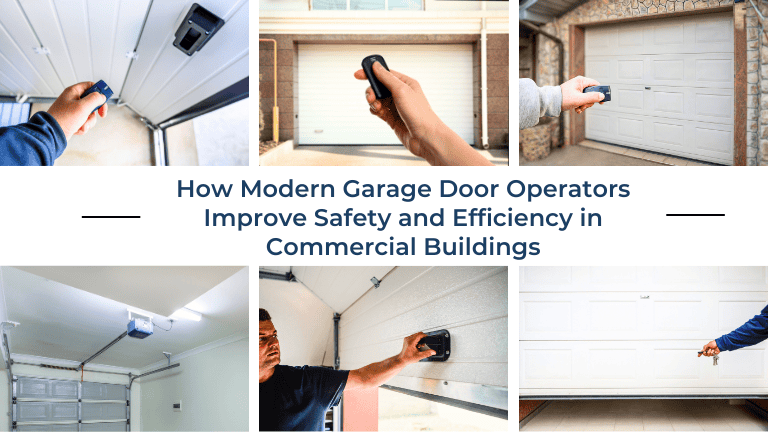
In commercial buildings, efficiency and safety are not optional—they are operational necessities. From warehouses and retail facilities to parkades and service centres, one system quietly influences daily workflow more than most people realise: the garage door operator.
Modern garage door operators have evolved far beyond basic open-and-close mechanisms. Today, they are intelligent, safety-driven systems designed to handle heavy-duty doors, frequent cycles, and strict compliance standards—all while improving energy efficiency and reducing downtime. When paired with robust door systems such as rolling steel or commercial steel doors, the right operator becomes a critical asset rather than a background function.
This blog explores how modern garage door operators enhance safety, streamline operations, and support long-term efficiency in commercial buildings—particularly in Canadian environments where climate, usage, and regulations demand more from every component.
Contents
ToggleWhat Are Garage Door Operators in Commercial Settings?
In commercial environments, garage door operators are industrial-grade motor systems that safely and consistently move large, heavy doors. Unlike residential units, these operators are built to manage:
- High door weights
- Frequent opening and closing cycles
- Larger openings and wider spans
- Advanced safety requirements
- Integration with access control systems
Whether operating rolling steel doors in a warehouse or commercial steel doors in a retail or parkade setting, the operator acts as the control centre of the entire door system. Its performance directly affects safety, speed, and reliability.
Why Safety Is a Top Priority in Commercial Door Systems
Commercial buildings experience far more foot traffic, vehicle movement, and operational stress than residential properties. As a result, door safety becomes a primary liability concern if systems are outdated or poorly maintained.
- Built-In Safety Mechanisms
Modern garage door operators are equipped with advanced safety features, including:
- Photo-eye sensors to detect obstructions
- Controlled start-and-stop functions to prevent sudden movement
- Emergency stop and manual override options
- Automatic reversal systems
These features significantly reduce the risk of injury, vehicle damage, or property loss—especially in busy environments with forklifts, delivery trucks, or pedestrian access.
- Consistent and Predictable Operation
Older systems often suffer from uneven movement or delayed responses. Modern operators deliver consistent performance, reducing unexpected behaviour that could lead to accidents.
- Compliance with Canadian Safety Standards
In Canada, commercial door systems must meet strict safety and electrical standards. Updated operators help ensure compliance while reducing the risk of costly violations or shutdowns.
Efficiency Gains: How Operators Improve Daily Operations
Beyond safety, modern operators shine.
- Faster Access and Reduced Downtime
High-performance operators open and close doors at controlled but efficient speeds, keeping workflows moving without compromising safety. This is especially valuable in logistics, warehousing, and service facilities where time delays translate directly into operational costs.
- Designed for High-Cycle Use
Commercial operators are engineered for durability. When paired with properly installed garage door parts, they can handle hundreds of cycles per day without excessive wear.
- Energy Efficiency Benefits
Tighter control over door movement reduces the amount of time doors remain open, helping maintain interior temperatures. This can lead to noticeable energy savings, particularly in climate-controlled facilities.
The Role of Automation and Smart Controls
Automation has become a defining feature of modern commercial door systems.
- Centralised Control Systems: Many operators integrate with building management systems, allowing facility managers to monitor door status, usage patterns, and maintenance alerts from a single interface.
- Access Management: Advanced systems enable different access levels for staff, deliveries, and emergency services, improving both security and accountability.
- Remote Monitoring and Diagnostics: Smart operators can identify irregularities early, prompting maintenance before a minor issue becomes a major failure. This proactive approach significantly reduces downtime and repair costs.
- Overhead Door Opener Integration: In some commercial environments, an overhead door opener is used to serve specific zones, such as loading bays or service entrances. Modern operators ensure smooth coordination across different door types within the same facility.
Matching Operators with Rolling and Steel Door Systems
Not all doors—and not all operators—are created equal. Matching the correct operator to the right door is essential for performance and longevity.
- Rolling Steel Doors
Rolling steel doors are compact, durable, and ideal for high-use environments. They require operators capable of handling vertical lift systems and consistent torque under heavy loads.
- Commercial Steel Doors
Commercial steel doors are often heavier and more insulated, providing enhanced security and environmental control. Operators must be powerful enough to move these doors smoothly without stressing springs or tracks.
Why Proper Matching is Important
Using an underpowered operator leads to:
- Increased wear on garage door parts
- Higher risk of breakdowns
- Reduced safety margins
- Shorter system lifespan
A properly matched system ensures smooth operation and predictable performance.
Maintenance, Parts, and Long-Term Reliability
Even the most advanced operator relies on routine care to perform at its best.
- Key Components That Require Attention
- Motors and gear assemblies
- Sensors and control boards
- Springs, cables, and rollers
- Limit switches and safety devices
Regular inspection of garage door components helps ensure the entire system remains safe and efficient.
Preventative Maintenance = Operational Stability
Scheduled maintenance reduces emergency repairs, extends equipment life, and keeps operations running without interruption. For commercial facilities, this stability is critical to meeting service commitments and customer expectations.
Harbourdoor’s Commercial Door Services: Built for Safety and Performance
At Harbour Door, we approach commercial door systems with a clear understanding of what businesses need: reliability, compliance, and long-term value.
How We Support Commercial Operations
- Selection of industrial-grade garage door operators matched to door type and usage.
- Professional installation focused on safety and efficiency
- Support for rolling steel doors and commercial steel doors
- Ongoing service and maintenance to reduce downtime
- Access to quality garage door parts for timely repairs
With decades of experience serving Victoria and surrounding communities, our team focuses on solutions that perform consistently in real-world commercial environments.
The Business Case: Cost, Compliance, and Longevity
Investing in modern garage door operators delivers measurable returns.
- Reduced Liability: Improved safety features lower the risk of accidents and associated costs.
- Lower Maintenance Expenses: Efficient systems experience less strain, resulting in fewer repairs and longer replacement cycles.
- Regulatory Confidence: Updated operators help ensure compliance with Canadian codes and workplace safety standards.
- Enhanced Property Value: Well-maintained, modern door systems contribute to the overall value and professionalism of commercial properties.
The Bottom Line
Modern garage door operators are no longer optional upgrades—they are essential components of safe, efficient commercial buildings. By combining advanced safety features, automation, and reliable performance, these systems support smoother operations and long-term savings.
Looking to improve safety and efficiency in your commercial facility? Partner with Harbour Door for expertly installed garage door operators and systems built to perform in demanding environments.
FAQs
1. What makes commercial garage door operators different from residential ones?
Commercial operators are designed for heavier doors, higher usage cycles, and stricter safety requirements, making them suitable for industrial and commercial environments.
2. Are rolling steel doors compatible with automated operators?
Yes. Rolling steel doors are commonly paired with heavy-duty operators that safely and efficiently manage vertical lift systems.
3. How often should commercial door systems be serviced?
Most commercial facilities benefit from professional inspections at least once a year, or more frequently for high-cycle operations.
4. Can modern operators help reduce energy costs?
Yes. Faster, controlled door movement and better sealing reduce heat loss and improve overall energy efficiency.